Registries
SART vs CARTR Plus: How Data Entry Differs for US and Canada Clinics
How data entry differs between SART CORS in the US and CARTR Plus in Ontario, across registry structure, validation, cycle linking, and terminology, and why a process built for one will not map to the other.

- SART CORS
- CARTR Plus
- Data entry
- Validation
For a clinic that reports to both, or for staff who move between US and Canadian reporting, the natural assumption is that the two registries want the same information in slightly different forms. They do not. SART CORS in the US and CARTR Plus in Ontario collect similar clinical facts, but they are built and governed differently, and they structure a treatment journey differently enough that a process tuned for one will not map cleanly onto the other. Here is where the real differences sit.
Two different kinds of registry
CARTR Plus is BORN's system, a provincial registry for Ontario. Clinics providing fertility treatment in Ontario report their cycles into it.
The US arrangement has two layers. SART CORS is the reporting system used by SART member clinics. Behind it, CDC's National ART Surveillance System (NASS) is the federal system that reporting clinics submit to under the Fertility Clinic Success Rate and Certification Act of 1992.
So in Ontario you are reporting to a provincial registry, and in the US you are feeding a federal surveillance system with a member layer in front of it. That difference in who runs the registry shapes much of what follows, from how data is checked to how much of the guidance is public.
How the data is checked
The accuracy loop works differently in each country.
In the US, CDC validates a sample of clinics each year against the medical record. Roughly 7 to 10 percent of reporting clinics are selected, their reported data is compared field by field with the chart, and discrepancy rates are published. Medical directors must verify the clinic tables by signature, and a clinic that is selected for validation and declines has its success rates removed from the public report. The pressure is on matching the chart, after the fact.
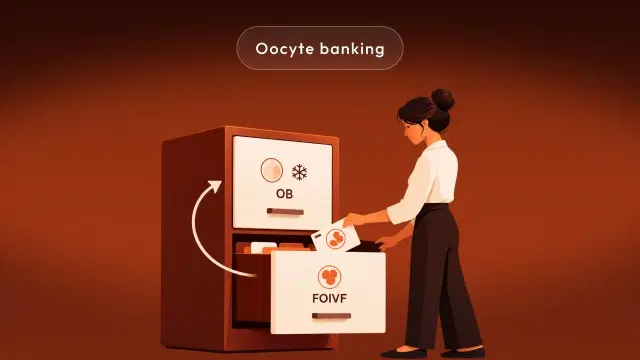
In Ontario, BORN returns acknowledgement reports after a submission, including a batch file and an error audit, which clinics use to reconcile their cycles and correct what was flagged. BORN also publishes data-quality findings. Its 2025 CARTR Plus review, for instance, highlighted recurring errors in how autologous oocyte banking cycles were being entered. The pressure is on a clean submission and a tidy reconciliation.
Both care about accuracy. But one is a retrospective national audit and the other is an acknowledge-and-reconcile loop, and that changes where a reporting team spends its attention.
How a journey is structured
This is where day-to-day data entry diverges most.
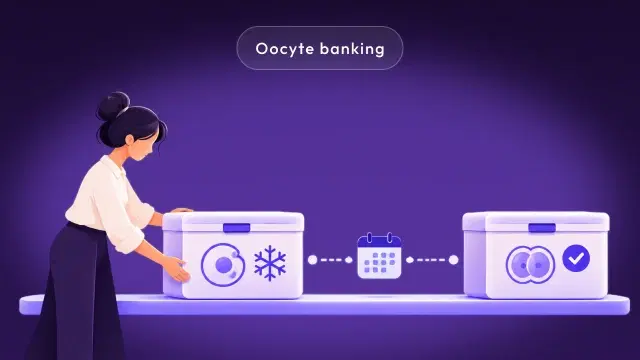
CARTR Plus is explicit about cycle linking. A journey is built from a primary cycle and secondary cycles linked back to it. An oocyte banking cycle links to the later frozen-oocyte IVF cycle, which links to later frozen embryo transfers. CARTR Plus also cannot link cycles between two different patients, which is why reciprocal IVF and gestational-carrier journeys have to be structured under the intended parent, sometimes with a cycle created specifically so a transfer has a valid primary to link to.
The US side reports at the cycle level as well, but the internal SART CORS entry model, including exactly how cycles are associated, sits inside the member system and is not published the way BORN's scenario guidance is. What is documented publicly is the cycle types and definitions in CDC's ART glossary and the reporting methodology in CDC's technical notes.
The practical point is simple: do not carry CARTR Plus's linking assumptions into SART, or the reverse. The clinical journey is the same in both countries. How each system expects you to represent it is not something to assume.
Cross-year outcomes
Both registries have to handle a retrieval and its eventual outcome falling in different years, and they solve it differently.
In US reporting it shows up as preliminary versus final data. A cycle where the eggs were retrieved in the reporting year but the first transfer's outcome is not yet known is reported as preliminary and finalized in a later year. CARTR Plus handles the same reality through its linked-cycle structure, where a later frozen embryo transfer links back to the original cycle. Same clinical fact, represented two different ways.
The diagnosis and reason fields
Both registries record why treatment is happening, but the taxonomies do not line up.
US reporting uses a set of reason-for-ART diagnosis fields: tubal factor, ovulatory dysfunction, diminished ovarian reserve, endometriosis, male factor, uterine factor, other, and unknown. CDC's validation shows these are the fields clinics most often get wrong, usually by adding a diagnosis the chart does not support or omitting contributing factors that it does. CARTR Plus frames reasons around the treatment cycle itself, including entries such as elective oocyte banking or banking for gonadotoxic reasons. A reason that is a single field in one system may have no one-to-one equivalent in the other.
What is published, and what is not
One difference matters for anyone trying to get the entry exactly right. BORN publishes clinical scenario guidance for CARTR Plus, including step-by-step data-entry scenarios for complex journeys like oocyte banking, reciprocal IVF, tandem IVF, and gestational carrier cases. SART does not publish an equivalent public data-entry guide. Its detailed entry guidance lives inside the member SARTCORS system, and the public US references are CDC's glossary, technical notes, and validation findings.
So when you need the exact way to enter a scenario, the Canadian answer is often a published document you can point your team to, and the US answer is often inside the system your clinic already uses.
What this means for a clinic reporting to both
Treat them as two systems, not one system with two output formats. The clinical data overlaps heavily, but governance, validation, journey structure, and terminology do not line up one to one. A submission process, a checklist, or a template built for CARTR Plus should be rebuilt for SART rather than reused, and the same is true in reverse.
How EmbryoLogix handles both
EmbryoLogix prepares submissions for both CARTR Plus and SART CORS by applying each registry's own rules rather than a single shared template. It checks a CARTR Plus journey against CARTR Plus's linking and cycle-structure requirements, and a US submission against the fields and consistency the national validation looks for, so the same clinical data is shaped correctly for whichever registry it is headed to. For a clinic that works with both, that removes the need to keep two separate mental models in your team's head.
The quick version
- CARTR Plus is a provincial registry run by BORN in Ontario. US reporting is federal, through CDC's NASS, with SART CORS as the member system in front of it.
- Accuracy is enforced by an annual medical-record audit in the US, and by acknowledgement reports and reconciliation in Ontario.
- CARTR Plus uses explicit primary and secondary cycle linking and cannot link across two patients. The SART CORS entry model is not published the same way.
- The diagnosis and reason taxonomies differ, and BORN publishes scenario guidance while SART keeps entry guidance inside the member system.
- Do not assume a process built for one registry works for the other.
About the author